Monday, August 1, 2011

Local Angelman Syndrome Group Moves Closer to $250K Grant

Local Syndrome Group Moves Closer to $250K Grant

As of Wednesday morning, FAST leads with more than 15,500 votes.
&nbps;0 Comments
One of the many frustrations parents of children with Angelman syndrome face is how close they are to a cure. Yet a lack of funding for research continues to be a roadblock to making it happen. 
Researchers in Florida already have cured mice of the rare genetic disorder, which is characterized by cognitive delays that impact both movement and speech. 
Now they need to re-create that cure in humans.
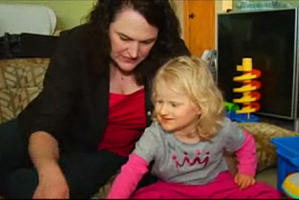
The Foundation for Angelman Syndrome Therapeutics, co-chaired by Darien’s Paula Evans and Debbie Guagliardo, is in the running for a $250,000 grant to help fund research for an Angelman’s cure. Evans is the mother of 6-year-old Ainsley, who was born with Angelman.
Home automation company Vivint is running a contest to award $1.25 million in funding to various charities throughout the U.S. and Canada.
As of Tuesday afternoon, FAST was in the lead for the $250,000 grand prize, with more than 14,000 votes. Vivint will announce a winner Aug. 20.
Yvonne Hamrick, of Fort Worth, TX, entered FAST into the contest, which she discovered last year.
“I’m just a mom and saw this as something I could do,” she said.
While Hamrick's 7-year-old son Joshua has Angelman, she said even people without a direct connection to the disease are responding resoundingly to the contest.
Children with Angelman are unable to speak and often experience motor delays. Some, such as Joshua, can’t walk. They are also more prone to seizures, one of the leading causes of death in Angelman patients.
Yet despite the challenges they face, people with Angelman are also characterized by a remarkably positive, sunny disposition.
“Our kids are so happy and just draw people into their world,” Hamrick said.
Guagliardo, who serves as FAST’s chief financial officer, said she’s seen the same thing, with people all over the world voting to support FAST.
“People are really rallying together and the community is becoming much tighter and larger as a result,” Guagliardo said. “This has been unbelievable for awareness already, and there are [nine weeks] left.”
To vote for FAST, first you must “Like” the Vivint Facebook page. Then log in to the contest page and vote here: http://www.vivint.com/givesbackproject/charity/43
You can vote once a day every day until the contest ends in mid August.
For more information on Angelman syndrome, visit http://www.cureangelman.com.

Insights for autism from Angelman syndrome

Insights for autism from Angelman syndrome

Benjamin Philpot Angela Mabb Matthew Judson
19 July 2011
9:28 AM ET

Similar symptoms: Angelman syndrome is caused by a deletion in the same genomic region that is affected in some cases of autism.

The word 'autism' has unfortunately entered our common lexicon, but few people have heard of Angelman syndrome, a closely linked disorder that is also accompanied by deficits in cognition and language. Autism is frequently diagnosed in individuals with Angelman syndrome1,2.

Angelman syndrome also shares a common genetic basis with some forms of autism: disruption in the number of copies of the UBE3A gene. Studying the effects of altered UBE3A gene dosage is likely to provide insight into brain defects associated with Angelman syndrome and autism, and to suggest targets for therapies.

With the exception of sex chromosome-linked genes, one copy of every gene in the body is inherited from each of an individual's parents. People usually have both maternally- and paternally-inherited copies of these alleles, but there are some genes — termed imprinted genes — for which only one copy is functional.

UBE3A is one example of an imprinted gene. Only the allele inherited from the mother is functional in neurons, whereas the paternal allele is silenced. This silencing is mediated by epigenetics — a process in which chemical modifications to DNA alter gene expression without changing the primary sequence. Thus, expression of UBE3A in neurons is entirely dependent upon expression from the maternally-inherited allele. The most common cause of Angelman syndrome is a deletion of the maternal chromosomal region 15q11-q13, which includes the UBE3A gene. Mutations in the maternal UBE3A gene alone are sufficient to cause Angelman syndrome.

Molecular intersection:

Although multiple genes are likely to contribute to most cases of autism, one of the most genetically identifiable forms of autism is a maternal duplication of the same 15q11-q13 region3,4,5. The fact that maternal, but not paternal, duplications of this region are associated with autism implicates the UBE3A gene, because UBE3A is the only paternally imprinted gene in this region.

Although speculative and in need of rigorous testing, these observations suggest that multiple copies of the UBE3A gene can lead to 15q-linked autism. A lack of a functional UBE3A gene copy in neurons, of course, results in Angelman syndrome.

Considering the potential importance of UBE3A gene dosage in both Angelman syndrome and 15q-linked autism, there is increased interest in studying the role of UBE3A in neural functions. Surprisingly little is known about UBE3A, but this is beginning to change.

We know that UBE3A is a ubiquitin E3 ligase that is involved in the degradation of proteins via the ubiquitin-proteasome pathway. Because point mutations that eliminate UBE3A ubiquitin ligase activity are sufficient to cause Angelman syndrome, the most likely explanation for Angelman syndrome — and for 15q-linked autism — is accumulation or enhanced degradation of UBE3A targets.

There are potentially many UBE3A targets and these may be relevant to multiple signaling pathways across different brain regions and periods of brain development. In this way, inappropriate levels of UBE3A may account for the multiple hits that are believed to underlie most cases of autism. Accordingly, a clear research goal is to identify UBE3A substrates in the brain that contribute to neural dysfunction, and the resulting cognitive and behavioral deficits.

Researchers are beginning to identify these brain-specific UBE3A targets6. Last year, Michael Greenberg's laboratory at Harvard Medical School identified two protein targets of UBE3A, called ARC and EPHEXIN-5, that affect synaptic receptors — proteins involved in neurotransmission7,8.

Combined with the subtle changes in brain morphology seen in people with Angelman syndrome and autism, these observations support the idea that both are largely disorders of the synapse, the junction between neurons9.

Postmortem studies of Angelman syndrome have revealed brain region-specific reductions in the density of dendritic spines — the sites of connections between neurons. Changes in synapse density and morphology may also be common features of autism spectrum disorders10.

Common circuits:

By identifying brain regions with impaired synapses caused by inappropriate UBE3A levels, we aim to understand how disrupted circuits contribute to both Angelman syndrome and autism spectrum disorders.

Research published in the past few years indicates that lack of the UBE3A protein prevents brain circuits from strengthening in response to experiences in the mouse sensory neocortex, a brain region involved in regulating sensory perceptions11,12. For example, in mice, UBE3A is required for ocular dominance plasticity — a well-defined model in which brain circuits are refined in response to experience during a critical period of brain development.

Changes in the ability to modify brain circuits in response to experience could underlie the sensory processing and cognitive deficits associated with Angelman syndrome. Whether excessive UBE3A, as seen in 15q-linked autism, also results in altered circuit plasticity remains to be tested. We suggest that the circuits affected in Angelman syndrome are similar to those disrupted in 15q-linked autism and perhaps other autism spectrum disorders as well.

Because Angelman syndrome and 15q-linked autism result from a clear genetic cause, these disorders are comparatively more tractable for therapeutic intervention than are other forms of autism. By studying the mechanisms of UBE3A gene imprinting and the role of UBE3A in circuit development, our goal is to help pave the way for novel therapies for both disorders.

Behavioral interventions can partially restore synapse and circuit plasticity in Angelman syndrome mice12. This suggests that the mechanisms underlying synaptic plasticity remain intact in the absence of UBE3A. If the same applies to autism, then behavioral or pharmacological therapies have the potential to restore function.

The identification of pathways relevant to synapse dysfunction in Angelman syndrome and 15q-linked autism will largely be based on the identification of brain-specific UBE3A targets. It is likely that UBE3A substrates accumulate to inappropriately high levels in Angelman syndrome but are degraded to inappropriately low levels in 15q-linked autism. Pharmacological approaches could regulate key UBE3A substrates and the pathways through which they signal.

Because UBE3A targets may be too numerous to address individually, manipulating UBE3A expression levels directly is potentially a more promising therapeutic strategy. Indeed, our laboratory, together with our collaborators Mark Zylka and Bryan Roth, has been awarded a grant from the Simons Foundation, SFARI.org's parent organization, to identify ways to manipulate UBE3A levels as a treatment for autism spectrum disorders.

Benjamin Philpot is associate professor of cell and molecular physiology at the University of North Carolina School of Medicine. Angela Mabb and Matthew Judson are postdoctoral fellows in his lab.

Original source of article: Insights for autism from Angelman syndrome

Friday, July 15, 2011

The Foundation for Angelman Syndrome Therapeutics (FAST) Finalist in $250,000 Online Contest

Vivint Gives Back Project Lets Voters Chose Favorite Non-profits FAST, One of 100 Regional Finalists; Encourages Supporters to Vote Now


July 8, 2011—The Foundation for Angelman Syndrome Therapeutics (FAST) is a regional finalist, and currently in 1st place, in the 2011 Vivint Gives Back Project, a national online campaign that will award $250,000 to the winning non-profit organization, and $100,000 to five regional charities throughout the United States and Canada. 
Vivint, one of the largest home automation companies in North America, is hosting the second annual campaign, which lets voters nominate, endorse and donate to their favorite local causes. 

During Phase One of the contest, which ran from April 25 to June 11, fans of Vivint’s Facebook page nominated and endorsed their favorite charities. Participants nominated 2,382 charities during the initial phase—a ten-fold increase over the 2011 inaugural contest—and cast 303,081 votes. 
The top 20 charities in each of four U.S. regions and Canada (100 total) during this phase were named regional finalists and moved onto Phase Two, which started on June 14 and will run through 11:59 p.m. EST on August 27, 2011. 

Vote Now! 
Supporters of FAST can cast their votes for the organization at http://www.vivint.com/givesbackproject. In addition to voting, supporters can also make online donations. On select days during Phase Two, Vivint will match these donations dollar-for-dollar up to $50 per donor, and $2,500 per charity. Participants can vote for one finalist per day. 

About FAST

The Foundation for Angelman Syndrome Therapeutics (FAST) is an all volunteer organization dedicated to finding a cure for Angelman Syndrome, a rare neuro-genetic disorder that causes severe intellectual and developmental delays. Individuals with Angelman Syndrome cannot speak. Many cannot walk. Almost all of them have debilitating seizures and all require life-long 24/7 care. Individuals with Angelman Syndrome tend to have a happy demeanor and are known for their fantastic smiles. Research has established that Angelman Syndrome is caused by the loss of function of a single gene. Scientists have already succeeded in reversing the effects of Angelman Syndrome in a mouse. This suggests that a cure for Angelman Syndrome is not only possible, but imminent. Curing Angelman Syndrome would open a gateway for curing other neurological disorders including autism and Alzheimer's disease. Join us now to be part of a miracle. Visit http://www.HelpSaveTheAngels.com for info on how to vote, click on First Time Voters Click Here. If you experience any problems in the voting process, click on contact us for quick response. 

Angelman syndrome, which affects 1 in 15,000 live births. This genetic condition is seen in people around the world and there are almost no known risk factors. Known for their great laughs and tight hugs, individuals who have Angelman syndrome are almost entirely non-verbal, face severe delays in gross and fine motor skills and often experience debilitating and resistant seizures. Individuals with Angelman syndrome struggle on a daily basis to learn skills that come to others easily and require 24/7 care and attention throughout their lives. Recently, Angelman syndrome received nationwide attention because actor Colin Farrell revealed that his 7 year-old son has Angelman syndrome. FAST is committed to assisting individuals living with Angelman syndrome to realize their full potential and achieve the best possible quality of life. 

About Vivint Gives Back

The Vivint Gives Back Project is a program of Vivint’s philanthropic initiative, Vivint Gives Back, which was created to focus the efforts of the employees at Vivint on banding together to alleviate hardship and restore hope for people in need. Vivint employees have the opportunity to contribute time and resources to service projects ranging from clean-up efforts in the aftermath of the Joplin, Missouri tornado, to providing meals at a Ronald McDonald House and adopting a local elementary school where our employees mentor and tutor students at risk in a long term relationship. 

About Vivint 
Vivint, Inc. is one of the largest home automation companies in North America. Operating throughout the United States and Canada, the company retains more than 5,000 employees and services close to 500,000 customers. With award-winning customer service and smart technology, Vivint is dedicated to enhancing security, increasing energy efficiency, and creating simple, affordable home automation solutions for its customers. For more information, visit www.vivint.com. 

Thursday, June 9, 2011

Angelman Syndrome: Close to a Cure?

Angelman Syndrome: Close to a cure?


Rebecca Burdine knew something was wrong the day her baby girl was born.  Sophie was born without a natural sucking reflex, making it nearly impossible to eat.  Later, it became clear that she had hardly any muscle strength at all.  As the months passed, Burdine, a developmental biologist from Princeton University, grew more worried about her daughter's poor sleep patterns:  short blocks of sleep interspersed with intense screaming fits.  When she turned four months old, Sophie began having seizures, sometimes as many as three an hour.
The first time Sophie suffered an Absence seizure, also known as a "petit mal" seizure, Burdine had no idea what was happening: "It was like watching TV when suddenly the screen turns to static, and then the channel comes back like nothing ever happened," she says.
Several months later, Sophie was diagnosed with Angelman Syndrome, a genetic disorder marked by severe developmental delays, sleep disturbances, and oftentimes seizures.  Actor Colin Farrell recently sparked interest in this relatively rare condition when he spoke publicly about his 7-year-old son James' diagnosis on the Ellen DeGeneres Show.  The Irish actor discussed how his son's seemingly always happy demeanor and intense fascination with water caused James' pediatrician to test him for Angelman.  As of last week, searches for Angelman Syndrome has spiked on Yahoo! , at one point becoming its third most trending topic.
According to Burdine, the newly renewed interest in the disease could not come at a better time, as researchers are on the brink of finding a cure.
"The dogma used to be that if you were born with a developmental disorder … that was it," said Dr. Paul Lombroso, director of the Laboratory of Molecular Neurobiology at Yale University.  "This has all changed."
Adds Burdine:  "We now know the 'cards' can be re-dealt!"
As opposed to other neurological disorders like autism and Alzheimer's, which affect many different genes, Angelman Syndrome only affects one: the UBE3a gene.  Because researchers can pinpoint what causes the disorder—the absence of UBE3a—they were not only able to genetically alter a mouse to mimic Angelman symptoms, but they were able to successfully cure it.
Tailoring that cure for humans is the logical next step, but funding is still needed to move forward.
"Everyone talks about finding a cure: 'We're going to cure cancer, we're going to cure autism, diabetes, etc.' But we're actually talking about a cure here," Burdine said. "What's frustrating is that the only thing in the way is money."
Burdine says that while Angelman is a relatively rare disease—affecting 1 in 15,000-20,000 births—curing it would be a gateway to finding a cure for other neurological disorders—like Alzheimer's and autism—as well as anything that affects learning and memory.
"This is a chance where someone's investment can really pay off and they can see the results," she said.
Now five years old, Burdine's daughter Sophie still can't walk or even sit up on her own.  Without a chewing reflex, she is only able to eat pureed baby food.  She is carried everywhere she goes, and still wears diapers.  She also can't speak.
"As much as I love my daughter's smiles and her giggles, I want to get rid of the seizures; I want her to be able to eat real food; I want to be able to talk to her: simplistic things that would be profoundly important for making her life better."
To learn more about AS, and how you can help, visit CureAngelman.org.


Daughter Inspires Parents to Build Inclusive Park


Daughter inspires parents to build inclusive park

Kelly Meissner plays with her daughter Kate, who has Angelman syndrome, at their Elmira home, Thursday.
Inspiring Kelly Meissner plays with her daughter Kate, who has Angelman syndrome, at their Elmira home, Thursday.
Mathew McCarthy, Record staff
ELMIRA — Kelly Meissner decided she needed to do something good with all the anxious energy after her baby daughter was diagnosed with a severe genetic disorder, rather than getting mired in bad thoughts.
Her daughter Kate was a shining example of that positive approach.
“To Kate, she’s completely normal,” Meissner said. “She’s happy and loves her life.”
Meissner wants her daughter to be able to enjoy simple childhood pleasures regardless of her disability, inspiring her to raise money to build a park accessible to all children in the family’s hometown of Elmira.
Under the banner Kate’s Kause, Kelly and Jeremy Meissner have raised about $85,000 in a little over half a year. They hope to raise the estimated cost of at least $150,000 by next spring to have the park ready for the summer.
The play area will include equipment appealing to children of all abilities and special turf that’s easy to navigate and safe for disabled children.
Kate, who’s just shy of her second birthday, has Angelman syndrome. The rare genetic disorder causes severe developmental delays and neurological problems.
Limited speech, sleep disorders, and trouble with movement and balance are common symptoms.
While there’s no specific therapy for the syndrome, medical treatment is usually required for seizures. And various forms of therapy, including physical, occupational and communication therapy, can help a person develop as many skills as possible.
“It’s a pretty upsetting and severe diagnosis,” Meissner said.
Kate’s parents noticed in her first few months that she was lagging behind other children and not reaching such milestones as crawling, sitting and eating solids when expected. Meissner researched possible causes, but that didn’t prepare her for the doctor’s prognosis last summer.
“We were pretty shocked, but she’s still our girl, so we’re trying to do our best to cope,” Meissner said.
Life with a disabled child can be difficult, and the Meissners grieved about losing the future they had imagined for their daughter and family. Meissner still finds it tough knowing Kate will probably only ever say a few words.
“It’s those little day-to-day things that are the hardest for me,” she said.
But she said they’ve also learned valuable lessons from Kate. One life-changing realization came when the Meissners, including Kate’s older brother Jamieson, enjoyed a day at Marineland like any other family.
“It’s not so bad to be special,” Meissner said.
Kate is a fighter who struggles, but keeps working to do ordinary things like crawling and sitting. Once she learned how to crawl on her belly earlier this year, she hasn’t stopped and now she’s crawling on all fours.
“She hardly sits still anymore,” Meissner said.
Every little accomplishment is celebrated. Seeing her progress, helped in part by physical and occupational therapy a few times a week, Meissner is hopeful that one day Kate will walk.
“She’s on Angelman time. She just does everything slow and on her own schedule,” she said.
The couple is determined to treat Kate like any other child, encouraging her and pushing for her to be as integrated as possible. Next fall, Kate is starting at the local preschool.
They want other children and families to appreciate Kate for who she is, too, which drives their efforts to build the inclusive park.
Meissner imagines children of all abilities playing together, just being kids. There she knows Kate will enjoy every minute.
“All she wants to do is live,” Meissner said. “She’s just so happy living.”
Find out more at www.kateskause.com. Kate’s Kause is a finalist in the Keg restaurant’s Thanks a Million contest, awarding $25,000 grants to community projects. Vote at www.thekegthanksamillion.com until June 14.

Sunday, June 5, 2011

Tommy's Dad, FAST, and Colin Farrell...

This is a post written by Mike Ross, dad to Tommy Ross. Tommy had Angelman Syndome, and left this earth at the tender age of only 5 years old, due to complications from seizures. Mike, dedicated to his son Tommy,  "has a dream about seizures being cured". He runs a group on Facebook, called Suck Feizures (Stop Seizures Now).

I am putting the text of his most recent post here, but please visit his blog and read more about his fight at Stop Seizures Now. Here is the text of his blog post titled Foundation for Angelman Syndrome Therapeutics: FAST-Colin Farrell's in the House.

There are so many people in the Angelman Syndrome family, that are hoping for a cure, to this condition that is caused by a deletion of chromosome 15. While angels are a joy to live with, due to their magnetic, happy personalities, infectious smiles, and laughter, it would benefit them and their loved ones when that medical breakthrough is discoverd. Notice the "when" and not the "if," because that is for a reason, as the work of Dr. Edwin Weeber and others, with animal projects have proven that Angelman Syndrome can be created and cured at the genetic level. Ten years ago, "if" would have been appropriate, as some of the most intensive research has taken place in the past couple, due to the dedication of doctors and groups like FAST. For those of you whom are not familiar with FAST, it stands for Foundation for Angelman Syndrome Therapeutics. Based out of Illinois, and run by an all volunteer staff that are all parents to a boy or girl with Angelman Syndrome, they've got the passion and the decency to never give up.

It is too late for my son Tommy, who sadly passed away from a seizure related to Angelman Syndrome in 2009. This is the same story for other parents of Angels, who miss their little ones, more than mere words on a blog could express. Yet there are thousands of parents and family members across this globe, which is becoming smaller everyday, that hold out the hope for a cure for Angelman Syndrome, which causes major developmental delays, such as those related to mobility and speech. FAST offers a chance for these parents, as the organization is broken down into a Board of Directors and Scientific Advisory Board. This unique partnership, along with its volunteers, makes it an "effective machine," for new possibilities, including the cure that's around the corner if the necessary funding can be discovered. When you think about the cost versus what it would mean to parents and children everywhere, it is a "drop in the hat," and I cannot stress enough the importance of donating to FAST whatever you can.

Funding goes to help discover new treatments for the cure of Angelman Syndrome, along with helping angels get better medical care. That is the proverbial "win win", and the passion that FAST has cannot be denied. Parents of angels are running races, generating community events, all to help out this efficient organization. Even Colin Farrell, whose son has Angelman Syndrome, has chosen to work with FAST because of this level of dedication. For more information, go to their internet address athttp://www.cureangelman.org/. There you will see a group that is committed to a cure, and you can reach them at 1-866-783-0078. Look at their site, and I am sure that you will be impressed by their endeavor, because a cure for Angelman Syndrome is a reality.

Please visit and donate!

Also, if you want to help Mike in his fight for seizures and his work with the Vanderbilt University's Kennedy Center Angelman Syndrome Program, you can purchase a SUCK FEIZURES, Tommy Collection shirt , and $4 from the sale of every shirt will go to Vanderbilt's program.

Love one another~Yvonne