Tuesday, August 2, 2011

An Angel in our Midst...

An Angel in our Midst...

When we commence our parenting journey we hope and strive for the very best for our children.  We want them to be the best they can be. We dream about what they might become, who they might become, what they will accomplish in their lifetime. For Meagan, her hopes and her dreams for her daughter Molly faltered when her little girl was diagnosed with Angelman Syndrome just after her first birthday. Following this, Meagan’s dreams for her daughter became more simple, more basic, more grounded and all along the way she has had to fight to ensure that little Molly will achieve all of them.  
This is a raw and honest depiction of life with a beautiful special needs child. Driven to the depths of depression and despair then salvaged through self-determination, friendship and self-belief, Meagan tells her story of her fight to give her daughter a voice and to find her place in this world.
This is Meagan’s story of her beautiful daughter Molly……
Molly

Who is Molly?
Molly is the youngest of our two daughters; a tenacious, inquisitive and beautiful child, she’s just celebrated her fourth birthday. Just after her first birthday Molly was diagnosed with Angelman Syndrome. It rocked our world.
The Tough Road to Diagnosis
When we were on our way for our 6 month immunisations we stopped at the local supermarket. Molly was in the trolley baby capsule and we passed another mum with her little boy. He looked about Molly’s age and he was sitting and feeding himself a rusk. With our first daughter we religiously checked her progress in developmental books; with Molly we thought we were old hats! I couldn’t believe we had missed this!
When we compared her to the standard milestone checklist at her 6 month immunisations it really hit home that Molly was behind. So began an exhausting six month process of tests and assessments, paediatricians and specialists to determine the cause of Molly’s developmental delays. I had done a fair bit of Internet research and based on a few of her symptoms and behaviours I found Angelman Syndrome and discussed this with her specialists. It took four separate ‘discussions’ over a four month period to finally have the test done. My suspicions were confirmed.  

Significantly today marks three years to the day since Molly has been diagnosed. It's a day of mixed emotions....
When the whole process of diagnosis began I developed severe depression  which affected the way professionals regarded me – given the circumstances of course I was depressed but I still hadn’t lost sight of the fact that I needed to find answers for my daughter. I needed them to listen to me and to treat me with respect. Ironically Dr Harry Angelman, who discovered the syndrome, has often been heard telling his students “Your greatest ally is an observant mother – listen to her”. That’s some good advice. 

What is Angelman Syndrome?
Always quick with a smile...
Affecting between 1 in 15,000 and 1 in 20,000 children Angelman Syndrome is caused by one ineffective gene (ube3a). In Molly’s case she is missing a piece of DNA so small from Chromosome 15 that you can only see it through a high-powered microscope. The loss of that single gene means that she has a movement and balance disorder that affects her ability to learn to walk, although we hope that she will walk within the next few years with the assistance of therapy. Molly will never speak and she has severe seizures which can be difficult to control.  When she was younger she had problems with reflux and gaining weight so she had a gastric feeding tube put in her tummy which has only just been removed recently. One positive of this horrible syndrome is that Molly has a very happy disposition, she is very social and an absolute joy to be around.

The Guilt
I felt horrible when we started the path to diagnosis, and still did for some time after. I felt a terrible sense of guilt, like something I had done during my pregnancy had caused this. I’ve since discovered this isn’t true and 99% of the time AS is a random that doesn’t run in families. Regardless I re-lived things that had happened in my pregnancy trying to assign blame;  I also blamed myself for not seeing the developmental delays earlier.
Ultimately I had almost come to the unthinkable decision that my family would be better without Molly and me! Thankfully I confided in a friend and developed the strength, combined with anti- depressants to work my way through it.
For me, the best support was talking about it. It was so hard to talk to a lot of people close to me as they didn’t understand what I was going through but again – looking back, they wanted to help and didn’t know how. My GP was great (with me), he could see the signs that I was depressed and referred me to a therapist. Personally I found talking with others more beneficial than the therapist, there are online chat groups where you can remain anonymous and ask others questions. However there is a fine line between looking for answers online for all hours of the night and retaining some semblance of sanity.
After diagnosis, even with the knowledge that the condition is random and could happen to anyone, I wasted many an hour blaming myself – what if I hadn’t fallen pregnant that month? What if it had been another egg? What if? What if? What if?
I don’t believe that special people are given special children, or necessarily that things even happen for a reason; I tend to think that it’s just another of life’s dynamics. However what Ido know is that I would never give Molly back.

A Day in the Life of Us
When you asked this question my initial thought was –just like everyone else’s day - busy, crazy…
 Its only when I don’t have the kids around, or I see other families that I realise that life with Molly is almost like caring for a baby – a 15kg, 1m tall baby! I need to get her out of bed, take her to the toilet, feed her, bathe her, carry her and supervise her 24/7.
As for therapies - they are tedious. It is invasive to have someone else tell you how to teach your child things that should come naturally – but it’s also extremely necessary. Molly has speech, physio and occupational therapy. When we have time we try to fit in hydro therapy and we would eventually like to start horseback therapy as well. Therapies are what will help Molly reach her full potential. Unfortunately essential therapies like these are something a special needs mum often has to fight for with lack of resources across the board in Australia – just another job to do!

The impact of Angelman’s on Family Life
Like most families we are very, very time poor. We are often tired with Molly’s sleeping habits (some nights she might be awake for hours at a time and then still wake bright as a button!). Strangely enough – this is life as we know it.
We go about our day to day activities without giving too much thought to Angelman’s. Sometimes the fact that Molly has a severe disability is only highlighted by seeing the ease another young child learns new tasks (although I would never begrudge another mum bragging rights, and I never show my pain outwardly). Sometimes, her disability is made obvious to me by an ignorant stranger staring at her if she is communicating to me by making a loud noise, or telling me she is too big to be in a pram.
 
Sisterly love - Molly and her older sister Eva
 
One positive we have learned as a family is that we no longer sweat the little things. We have learned to be very appreciative of what we dohave, and not put too much worry into what we don’t. In the early days of diagnosis I worried for Molly’s older sister Eva. Eva started Prep this year and I am so proud of her, she is patient, understanding and an extremely compassionate little girl. Something that living with Molly and Angelman Syndrome has definitely taught her.
A Cure for Angelman Syndrome
At the moment there is not cure for Angelman’s. But (and I’m very aware that when I say this that some people look at me with pity; that I have false hope) I sincerely believe that we willhave a cure for Angelman Syndrome in Molly’s lifetime – and sooner rather than later. When I say a ‘cure’, I mean something to reverse the effects of the syndrome.
Research has only really started heating up in the last 10 years. We understand the syndrome and we know what causes it (there are a lot of conditions such as Autism where the cause is still unknown) and that’s really positive. There is an animal model that replicates the condition (enabling us to test scenarios and drugs) and the animal model has been cured. The scientific interest in Angelman Syndrome has risen tenfold in the last few years which is another indication that the finish line is near.
Unfortunately the main roadblock is money. Research isn’t cheap. Regardless, I look forward to the day that I hear my little girl tell me that she loves me.
Fighting for a Voice
When researching for our diagnosis as well as after Molly was diagnosed we noticed a huge void in information and support for families. We also found that a researcher in the US had “cured” Angelman Syndrome in mice and there was no research happening in Australia at all.
I set up a website called ‘Molly’s Voice’ and attempted to ‘talk through’ my wish list. I guess initially I was just putting it ‘out there’ into the abyss that is the World Wide Web. I also found it extremely therapeutic. Some goals that we set were to raise awareness in Australia as well as to promote research into AS. Another fundamental goal was to build a support network for Molly and to raise the profile of Rare Diseases.
Remarkably we now have a National Foundation, Foundation for Angelman Syndrome Therapeutics (FAST) Australia which is dedicated to raising funds for research into the syndrome in Australia.  I also now sit on the board of FAST in the United States. We now also have an active Queensland support group and since starting this journey we have held three annual awareness walks in Cairns for Rare Disease Day and I have recently returned from Perth where people from across Australia met with the mission to form a National body to advocate for those with Rare conditions.  Molly’s website has had over twenty five thousand hits and we receive and give support across the globe for the daily challenges of AS.
Advice to Other Parents
Don’t give up! You know your child better than anyone else. If you are not getting the answers you require, just ask and ask again. If you still aren’t getting anywhere, go to someone else and ask them. Don’t be too proud to medicate for depression, you have every right to be depressed but there is no shame in having a ‘crutch’ to help you through be it therapy, medication, whatever.  My best advice is probably the hardest to take when you are actually in the situation and it is often only seen in hindsight, however it is this - things willget better.
For me, I’m stronger now that any mum should need to be.  I’ve learned some tough lessons about life and people. I have learned to advocate and to stand up for the things I believe in, but most of all I have learned that love doesn’t need words. 


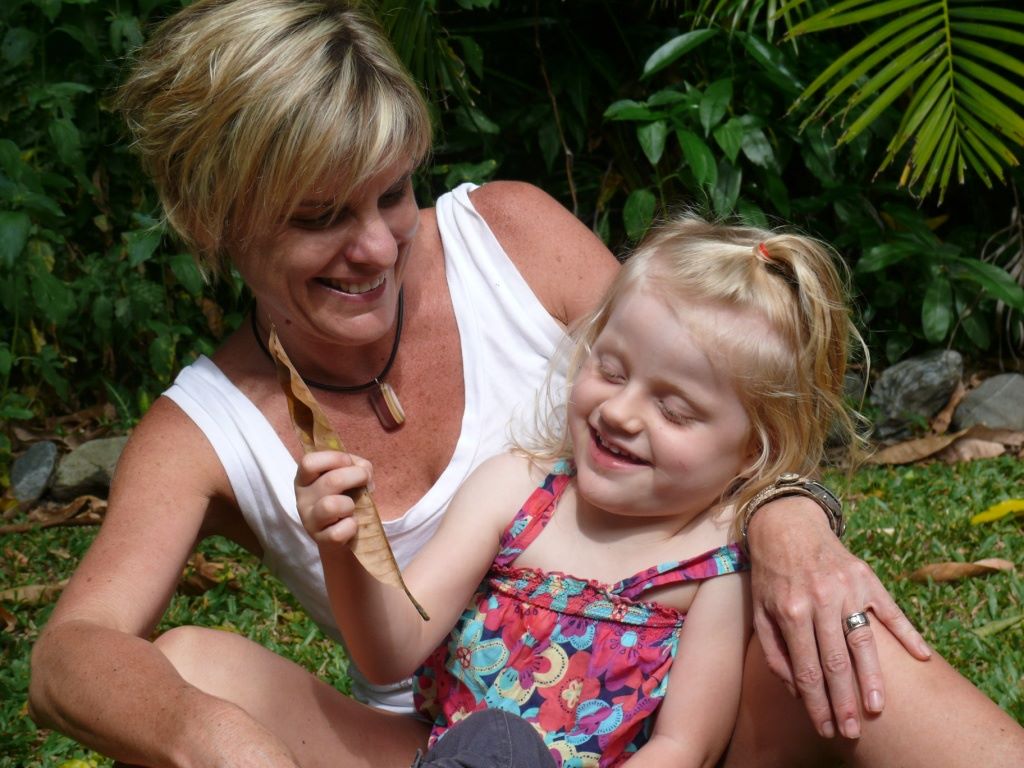
Meags and Molly.....
 Thanks so much to my dear friend Meagan for sharing her story x
For more information about Angelman Syndrome:
Foundation for Angelman Syndrome (FAST) Australia:http://www.cureangelman.org/au/
Molly’s Voice: http://www.mollysvoice.org/

Taken from ORIGINAL SOURCE: CRAP MAMMA - Creative Relaxed Approach Parenting  FABULOUS blog!!

Monday, August 1, 2011

Local Angelman Syndrome Group Moves Closer to $250K Grant

Local Syndrome Group Moves Closer to $250K Grant

As of Wednesday morning, FAST leads with more than 15,500 votes.
&nbps;0 Comments
One of the many frustrations parents of children with Angelman syndrome face is how close they are to a cure. Yet a lack of funding for research continues to be a roadblock to making it happen. 
Researchers in Florida already have cured mice of the rare genetic disorder, which is characterized by cognitive delays that impact both movement and speech. 
Now they need to re-create that cure in humans.
The Foundation for Angelman Syndrome Therapeutics, co-chaired by Darien’s Paula Evans and Debbie Guagliardo, is in the running for a $250,000 grant to help fund research for an Angelman’s cure. Evans is the mother of 6-year-old Ainsley, who was born with Angelman.
Home automation company Vivint is running a contest to award $1.25 million in funding to various charities throughout the U.S. and Canada.
As of Tuesday afternoon, FAST was in the lead for the $250,000 grand prize, with more than 14,000 votes. Vivint will announce a winner Aug. 20.
Yvonne Hamrick, of Fort Worth, TX, entered FAST into the contest, which she discovered last year.
“I’m just a mom and saw this as something I could do,” she said.
While Hamrick's 7-year-old son Joshua has Angelman, she said even people without a direct connection to the disease are responding resoundingly to the contest.
Children with Angelman are unable to speak and often experience motor delays. Some, such as Joshua, can’t walk. They are also more prone to seizures, one of the leading causes of death in Angelman patients.
Yet despite the challenges they face, people with Angelman are also characterized by a remarkably positive, sunny disposition.
“Our kids are so happy and just draw people into their world,” Hamrick said.
Guagliardo, who serves as FAST’s chief financial officer, said she’s seen the same thing, with people all over the world voting to support FAST.
“People are really rallying together and the community is becoming much tighter and larger as a result,” Guagliardo said. “This has been unbelievable for awareness already, and there are [nine weeks] left.”
To vote for FAST, first you must “Like” the Vivint Facebook page. Then log in to the contest page and vote here: http://www.vivint.com/givesbackproject/charity/43
You can vote once a day every day until the contest ends in mid August.
For more information on Angelman syndrome, visit http://www.cureangelman.com.

Insights for autism from Angelman syndrome

Insights for autism from Angelman syndrome

Benjamin Philpot Angela Mabb Matthew Judson
19 July 2011
9:28 AM ET

Similar symptoms: Angelman syndrome is caused by a deletion in the same genomic region that is affected in some cases of autism.

The word 'autism' has unfortunately entered our common lexicon, but few people have heard of Angelman syndrome, a closely linked disorder that is also accompanied by deficits in cognition and language. Autism is frequently diagnosed in individuals with Angelman syndrome1,2.

Angelman syndrome also shares a common genetic basis with some forms of autism: disruption in the number of copies of the UBE3A gene. Studying the effects of altered UBE3A gene dosage is likely to provide insight into brain defects associated with Angelman syndrome and autism, and to suggest targets for therapies.

With the exception of sex chromosome-linked genes, one copy of every gene in the body is inherited from each of an individual's parents. People usually have both maternally- and paternally-inherited copies of these alleles, but there are some genes — termed imprinted genes — for which only one copy is functional.

UBE3A is one example of an imprinted gene. Only the allele inherited from the mother is functional in neurons, whereas the paternal allele is silenced. This silencing is mediated by epigenetics — a process in which chemical modifications to DNA alter gene expression without changing the primary sequence. Thus, expression of UBE3A in neurons is entirely dependent upon expression from the maternally-inherited allele. The most common cause of Angelman syndrome is a deletion of the maternal chromosomal region 15q11-q13, which includes the UBE3A gene. Mutations in the maternal UBE3A gene alone are sufficient to cause Angelman syndrome.

Molecular intersection:

Although multiple genes are likely to contribute to most cases of autism, one of the most genetically identifiable forms of autism is a maternal duplication of the same 15q11-q13 region3,4,5. The fact that maternal, but not paternal, duplications of this region are associated with autism implicates the UBE3A gene, because UBE3A is the only paternally imprinted gene in this region.

Although speculative and in need of rigorous testing, these observations suggest that multiple copies of the UBE3A gene can lead to 15q-linked autism. A lack of a functional UBE3A gene copy in neurons, of course, results in Angelman syndrome.

Considering the potential importance of UBE3A gene dosage in both Angelman syndrome and 15q-linked autism, there is increased interest in studying the role of UBE3A in neural functions. Surprisingly little is known about UBE3A, but this is beginning to change.

We know that UBE3A is a ubiquitin E3 ligase that is involved in the degradation of proteins via the ubiquitin-proteasome pathway. Because point mutations that eliminate UBE3A ubiquitin ligase activity are sufficient to cause Angelman syndrome, the most likely explanation for Angelman syndrome — and for 15q-linked autism — is accumulation or enhanced degradation of UBE3A targets.

There are potentially many UBE3A targets and these may be relevant to multiple signaling pathways across different brain regions and periods of brain development. In this way, inappropriate levels of UBE3A may account for the multiple hits that are believed to underlie most cases of autism. Accordingly, a clear research goal is to identify UBE3A substrates in the brain that contribute to neural dysfunction, and the resulting cognitive and behavioral deficits.

Researchers are beginning to identify these brain-specific UBE3A targets6. Last year, Michael Greenberg's laboratory at Harvard Medical School identified two protein targets of UBE3A, called ARC and EPHEXIN-5, that affect synaptic receptors — proteins involved in neurotransmission7,8.

Combined with the subtle changes in brain morphology seen in people with Angelman syndrome and autism, these observations support the idea that both are largely disorders of the synapse, the junction between neurons9.

Postmortem studies of Angelman syndrome have revealed brain region-specific reductions in the density of dendritic spines — the sites of connections between neurons. Changes in synapse density and morphology may also be common features of autism spectrum disorders10.

Common circuits:

By identifying brain regions with impaired synapses caused by inappropriate UBE3A levels, we aim to understand how disrupted circuits contribute to both Angelman syndrome and autism spectrum disorders.

Research published in the past few years indicates that lack of the UBE3A protein prevents brain circuits from strengthening in response to experiences in the mouse sensory neocortex, a brain region involved in regulating sensory perceptions11,12. For example, in mice, UBE3A is required for ocular dominance plasticity — a well-defined model in which brain circuits are refined in response to experience during a critical period of brain development.

Changes in the ability to modify brain circuits in response to experience could underlie the sensory processing and cognitive deficits associated with Angelman syndrome. Whether excessive UBE3A, as seen in 15q-linked autism, also results in altered circuit plasticity remains to be tested. We suggest that the circuits affected in Angelman syndrome are similar to those disrupted in 15q-linked autism and perhaps other autism spectrum disorders as well.

Because Angelman syndrome and 15q-linked autism result from a clear genetic cause, these disorders are comparatively more tractable for therapeutic intervention than are other forms of autism. By studying the mechanisms of UBE3A gene imprinting and the role of UBE3A in circuit development, our goal is to help pave the way for novel therapies for both disorders.

Behavioral interventions can partially restore synapse and circuit plasticity in Angelman syndrome mice12. This suggests that the mechanisms underlying synaptic plasticity remain intact in the absence of UBE3A. If the same applies to autism, then behavioral or pharmacological therapies have the potential to restore function.

The identification of pathways relevant to synapse dysfunction in Angelman syndrome and 15q-linked autism will largely be based on the identification of brain-specific UBE3A targets. It is likely that UBE3A substrates accumulate to inappropriately high levels in Angelman syndrome but are degraded to inappropriately low levels in 15q-linked autism. Pharmacological approaches could regulate key UBE3A substrates and the pathways through which they signal.

Because UBE3A targets may be too numerous to address individually, manipulating UBE3A expression levels directly is potentially a more promising therapeutic strategy. Indeed, our laboratory, together with our collaborators Mark Zylka and Bryan Roth, has been awarded a grant from the Simons Foundation, SFARI.org's parent organization, to identify ways to manipulate UBE3A levels as a treatment for autism spectrum disorders.

Benjamin Philpot is associate professor of cell and molecular physiology at the University of North Carolina School of Medicine. Angela Mabb and Matthew Judson are postdoctoral fellows in his lab.

Original source of article: Insights for autism from Angelman syndrome

Friday, July 15, 2011

The Foundation for Angelman Syndrome Therapeutics (FAST) Finalist in $250,000 Online Contest

Vivint Gives Back Project Lets Voters Chose Favorite Non-profits FAST, One of 100 Regional Finalists; Encourages Supporters to Vote Now


July 8, 2011—The Foundation for Angelman Syndrome Therapeutics (FAST) is a regional finalist, and currently in 1st place, in the 2011 Vivint Gives Back Project, a national online campaign that will award $250,000 to the winning non-profit organization, and $100,000 to five regional charities throughout the United States and Canada. 
Vivint, one of the largest home automation companies in North America, is hosting the second annual campaign, which lets voters nominate, endorse and donate to their favorite local causes. 

During Phase One of the contest, which ran from April 25 to June 11, fans of Vivint’s Facebook page nominated and endorsed their favorite charities. Participants nominated 2,382 charities during the initial phase—a ten-fold increase over the 2011 inaugural contest—and cast 303,081 votes. 
The top 20 charities in each of four U.S. regions and Canada (100 total) during this phase were named regional finalists and moved onto Phase Two, which started on June 14 and will run through 11:59 p.m. EST on August 27, 2011. 

Vote Now! 
Supporters of FAST can cast their votes for the organization at http://www.vivint.com/givesbackproject. In addition to voting, supporters can also make online donations. On select days during Phase Two, Vivint will match these donations dollar-for-dollar up to $50 per donor, and $2,500 per charity. Participants can vote for one finalist per day. 

About FAST

The Foundation for Angelman Syndrome Therapeutics (FAST) is an all volunteer organization dedicated to finding a cure for Angelman Syndrome, a rare neuro-genetic disorder that causes severe intellectual and developmental delays. Individuals with Angelman Syndrome cannot speak. Many cannot walk. Almost all of them have debilitating seizures and all require life-long 24/7 care. Individuals with Angelman Syndrome tend to have a happy demeanor and are known for their fantastic smiles. Research has established that Angelman Syndrome is caused by the loss of function of a single gene. Scientists have already succeeded in reversing the effects of Angelman Syndrome in a mouse. This suggests that a cure for Angelman Syndrome is not only possible, but imminent. Curing Angelman Syndrome would open a gateway for curing other neurological disorders including autism and Alzheimer's disease. Join us now to be part of a miracle. Visit http://www.HelpSaveTheAngels.com for info on how to vote, click on First Time Voters Click Here. If you experience any problems in the voting process, click on contact us for quick response. 

Angelman syndrome, which affects 1 in 15,000 live births. This genetic condition is seen in people around the world and there are almost no known risk factors. Known for their great laughs and tight hugs, individuals who have Angelman syndrome are almost entirely non-verbal, face severe delays in gross and fine motor skills and often experience debilitating and resistant seizures. Individuals with Angelman syndrome struggle on a daily basis to learn skills that come to others easily and require 24/7 care and attention throughout their lives. Recently, Angelman syndrome received nationwide attention because actor Colin Farrell revealed that his 7 year-old son has Angelman syndrome. FAST is committed to assisting individuals living with Angelman syndrome to realize their full potential and achieve the best possible quality of life. 

About Vivint Gives Back

The Vivint Gives Back Project is a program of Vivint’s philanthropic initiative, Vivint Gives Back, which was created to focus the efforts of the employees at Vivint on banding together to alleviate hardship and restore hope for people in need. Vivint employees have the opportunity to contribute time and resources to service projects ranging from clean-up efforts in the aftermath of the Joplin, Missouri tornado, to providing meals at a Ronald McDonald House and adopting a local elementary school where our employees mentor and tutor students at risk in a long term relationship. 

About Vivint 
Vivint, Inc. is one of the largest home automation companies in North America. Operating throughout the United States and Canada, the company retains more than 5,000 employees and services close to 500,000 customers. With award-winning customer service and smart technology, Vivint is dedicated to enhancing security, increasing energy efficiency, and creating simple, affordable home automation solutions for its customers. For more information, visit www.vivint.com. 

Thursday, June 9, 2011

Angelman Syndrome: Close to a Cure?

Angelman Syndrome: Close to a cure?


Rebecca Burdine knew something was wrong the day her baby girl was born.  Sophie was born without a natural sucking reflex, making it nearly impossible to eat.  Later, it became clear that she had hardly any muscle strength at all.  As the months passed, Burdine, a developmental biologist from Princeton University, grew more worried about her daughter's poor sleep patterns:  short blocks of sleep interspersed with intense screaming fits.  When she turned four months old, Sophie began having seizures, sometimes as many as three an hour.
The first time Sophie suffered an Absence seizure, also known as a "petit mal" seizure, Burdine had no idea what was happening: "It was like watching TV when suddenly the screen turns to static, and then the channel comes back like nothing ever happened," she says.
Several months later, Sophie was diagnosed with Angelman Syndrome, a genetic disorder marked by severe developmental delays, sleep disturbances, and oftentimes seizures.  Actor Colin Farrell recently sparked interest in this relatively rare condition when he spoke publicly about his 7-year-old son James' diagnosis on the Ellen DeGeneres Show.  The Irish actor discussed how his son's seemingly always happy demeanor and intense fascination with water caused James' pediatrician to test him for Angelman.  As of last week, searches for Angelman Syndrome has spiked on Yahoo! , at one point becoming its third most trending topic.
According to Burdine, the newly renewed interest in the disease could not come at a better time, as researchers are on the brink of finding a cure.
"The dogma used to be that if you were born with a developmental disorder … that was it," said Dr. Paul Lombroso, director of the Laboratory of Molecular Neurobiology at Yale University.  "This has all changed."
Adds Burdine:  "We now know the 'cards' can be re-dealt!"
As opposed to other neurological disorders like autism and Alzheimer's, which affect many different genes, Angelman Syndrome only affects one: the UBE3a gene.  Because researchers can pinpoint what causes the disorder—the absence of UBE3a—they were not only able to genetically alter a mouse to mimic Angelman symptoms, but they were able to successfully cure it.
Tailoring that cure for humans is the logical next step, but funding is still needed to move forward.
"Everyone talks about finding a cure: 'We're going to cure cancer, we're going to cure autism, diabetes, etc.' But we're actually talking about a cure here," Burdine said. "What's frustrating is that the only thing in the way is money."
Burdine says that while Angelman is a relatively rare disease—affecting 1 in 15,000-20,000 births—curing it would be a gateway to finding a cure for other neurological disorders—like Alzheimer's and autism—as well as anything that affects learning and memory.
"This is a chance where someone's investment can really pay off and they can see the results," she said.
Now five years old, Burdine's daughter Sophie still can't walk or even sit up on her own.  Without a chewing reflex, she is only able to eat pureed baby food.  She is carried everywhere she goes, and still wears diapers.  She also can't speak.
"As much as I love my daughter's smiles and her giggles, I want to get rid of the seizures; I want her to be able to eat real food; I want to be able to talk to her: simplistic things that would be profoundly important for making her life better."
To learn more about AS, and how you can help, visit CureAngelman.org.